
BLOG
Investing Beyond the Present: How Urban Expansion Creates Tomorrow’s Landmarks
In real estate, timing isn’t just important — it’s everything. With 2025 shaping up as a record-breaking year for India’s property markets, the narrative is shifting rapidly from cyclical cycles to structural growth backed by macroeconomic resilience and renewed investor confidence.
Across the board — residential, retail and commercial — the message is clear: real estate is attracting unprecedented capital, and this trend is redefining the broader investment landscape.
Let’s break down what this means for urban expansion and the creation of tomorrow’s real estate landmarks — especially in dynamic regions shaped by infrastructure and institutional interest.
Institutional Capital Is
Reshaping the Market
2025 marked a watershed moment for India’s property sector, with institutional investments hitting an all-time high of $10.4 billion — a sign of confidence from both domestic and global investors.
Why that matters:
- Institutional allocations typically focus on assets with predictable revenue streams and long-term tenant prospects — office, retail, logistics and mixed-use spaces.
- These commitments reduce volatility and signal that property isn’t just a cyclical bet anymore — it’s a core asset class.
This shift drives demand for well-planned, strategically located developments that are designed to perform across economic cycles.
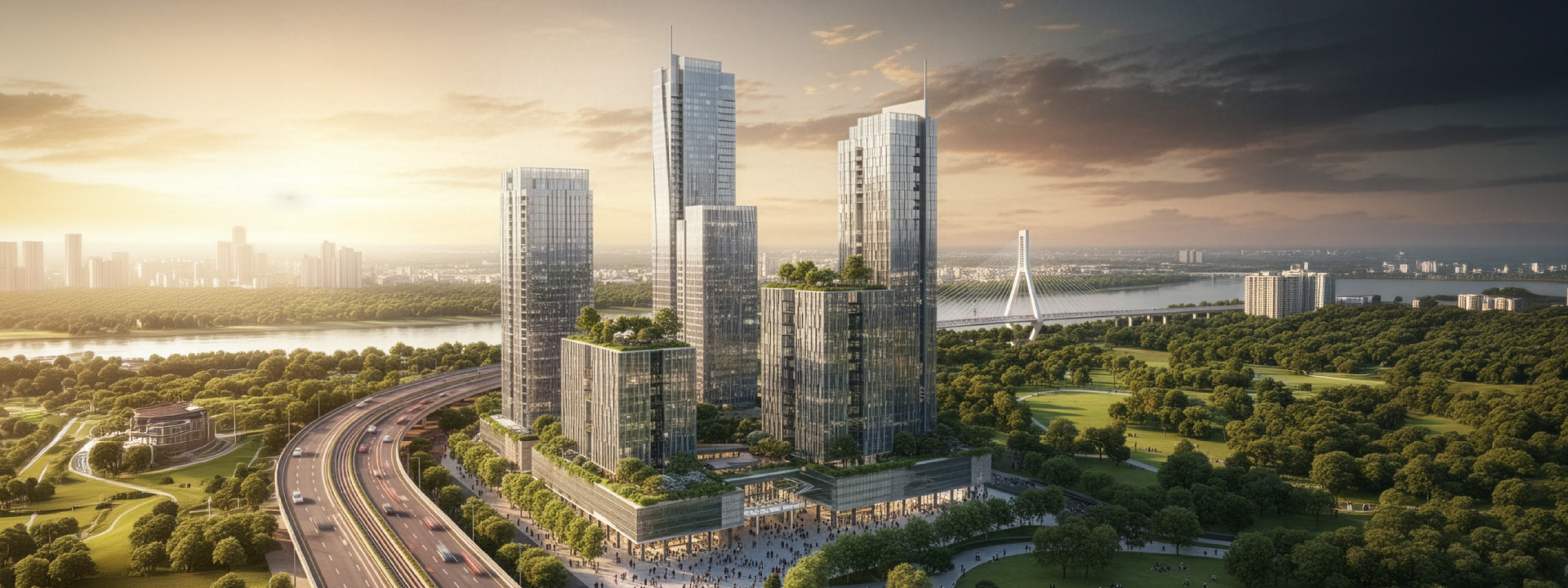
New Growth Catalysts Are Fueling Regional Pull
Certain urban corridors, particularly those with infrastructure catalysts, are gaining disproportionate attention.
For example:
- Reports highlight the rise of regions like Greater Noida and connected zones as future high-growth markets.
- Retail leasing — a key barometer of consumer and business confidence — is projected to reach post-pandemic highs by year’s end.
- Global Capability Centres (GCCs), which bring large enterprise operations to India, are expanding their footprint — further underwriting office space demand.
These developments aren’t happening by accident — they align with broader shifts like enhanced connectivity, improving transit infrastructure, and supportive policy frameworks.
Landmarks Are Being Defined by Connectivity
Urban expansion today is not defined by density alone — it’s defined by mobility and accessibility. Projects positioned near major transport nodes, expressways, or emerging transit hubs are gaining disproportionate appeal compared to traditional central business areas. This trend is reshaping where value is created:
- Roads and transit corridors unlock latent demand far ahead of market perception.
- Balanced ecosystems (work + retail + services) render yesterday’s standalone office parks obsolete.
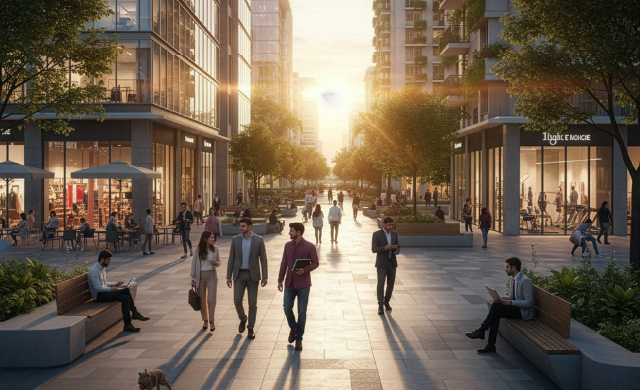
The emerging winners are developments that facilitate daily economic activity, not just weekend footfalls.
Land as an Engine of Growth, Not Just an Asset
Real estate investments are no longer siloed into speculative buying. They’re now part of a broader urban growth thesis:
- Retail absorption rates indicate consumer confidence and spending power.
- Office requirements are stabilising as enterprises rationalise space and expand in future-ready corridors.
- Institutional participation aligns property with capital markets, governance norms, and long-term financing.
This maturity elevates certain locations from development zones to future landmarks.
Looking Ahead: A Structural Shift, Not a Blip
India’s urban real estate trajectory is undergoing structural transformation — from short-term cycles to long-term, planned growth. Experts increasingly frame the market as not just growing, but evolving.
- Infrastructure-linked
- Mobility-driven
- Ecosystem-oriented
- Built for sustainability and adaptability
In other words, tomorrow’s landmarks won’t just be about where they are, but how they connect people, commerce and ideas.