
BLOG
The New Language of Commercial Real Estate: Connectivity, Clarity, and Longevity
Commercial real estate no longer speaks the language it once did. Terms like “prime address” and “central location” are slowly losing their persuasive power. In their place, a new vocabulary is taking shape—one that is sharper, more functional, and far more aligned with how businesses actually operate today. At the heart of this shift are three defining principles: connectivity, clarity, and longevity.
Together, they are redefining how commercial spaces are evaluated, selected, and valued.
Connectivity: Beyond Proximity, Toward Access
Connectivity today is not about being near everything—it is about being easily reachable from everywhere that matters. Businesses now evaluate locations through the lens of access:
- How smoothly can employees commute?
- How efficiently can clients, partners, and vendors reach the site?
- How well does the location integrate with regional transport networks?
Emerging commercial districts score higher on these parameters because they are planned alongside major infrastructure—expressways, transit corridors, and arterial roads. This form of connectivity reduces daily friction, improves workforce retention, and quietly enhances operational efficiency. In commercial real estate, access has become the new prestige.
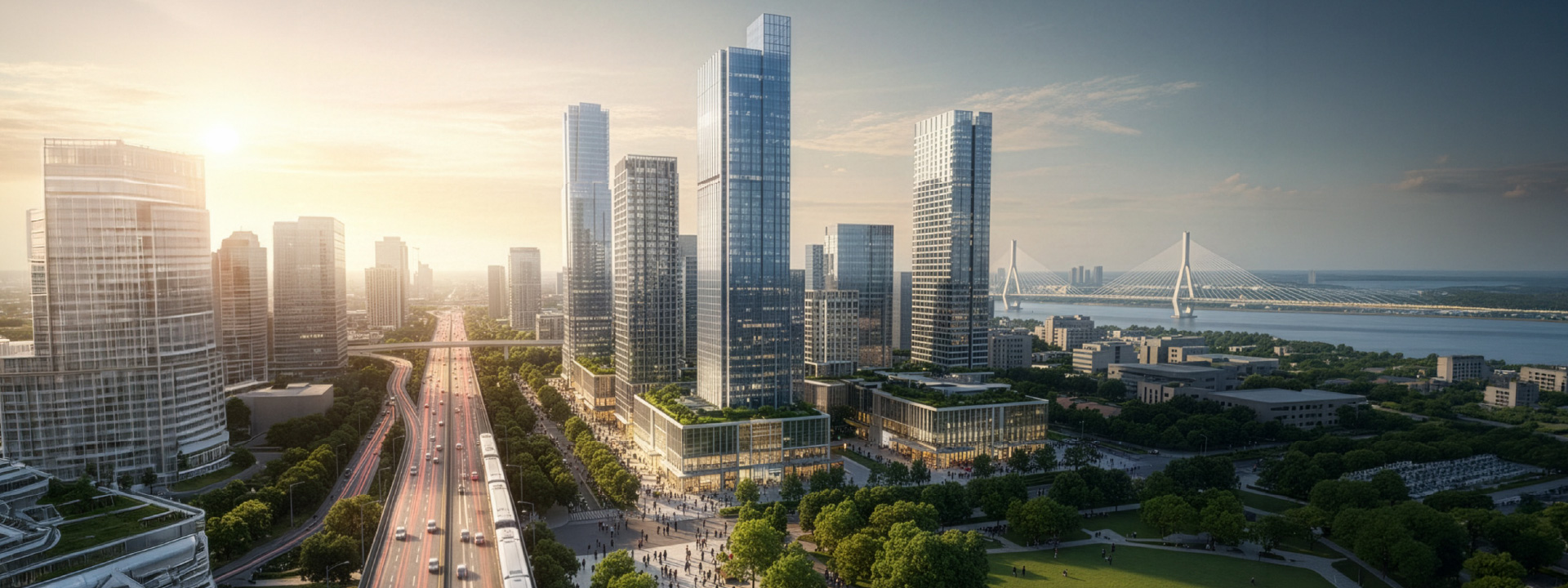
Clarity: Design That Works, Not Just Impresses
The second shift is architectural. Businesses are increasingly drawn to developments that prioritise clarity of design over visual excess. Clear layouts, efficient circulation, defined zones, and adaptable floor plates are no longer optional features—they are essentials. Clarity in commercial planning translates to:
- Better space utilisation
- Easier navigation for visitors and teams
- Reduced operational complexity over time
This approach also supports changing work models. As organisations adapt to hybrid structures and evolving team sizes, spaces that allow flexibility without disruption retain value longer. In contrast, overly rigid or trend-driven designs age quickly—and expensively.
Longevity: Planning for Relevance, Not Just Launch
Perhaps the most critical shift is the renewed emphasis on longevity. Smart investors and occupiers now ask a simple but powerful question: Will this space still work five, ten, or fifteen years from now? Longevity is built through:
- Disciplined master planning
- Infrastructure that anticipates growth
- Materials and layouts designed for durability
Commercial real estate that prioritises long-term relevance tends to deliver steadier rental performance and lower vacancy risks. It also attracts businesses that plan to grow rather than relocate—creating stability within the ecosystem.
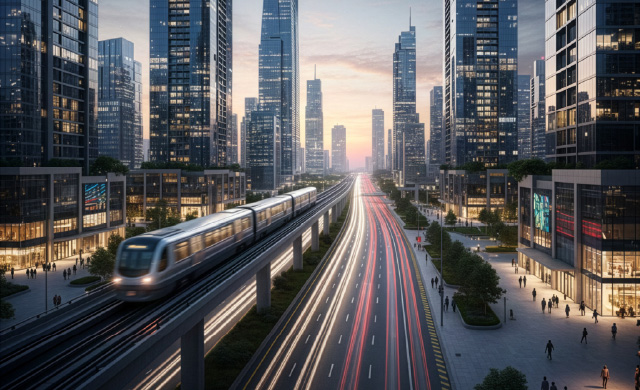

Why This New Language Matters
These three principles are interconnected. Strong connectivity enhances daily usability. Clear design improves efficiency and adaptability. Longevity ensures that both businesses and investors are protected from premature obsolescence.
Together, they shift commercial real estate from being a static asset to a dynamic business enabler.
A More Informed Market
This evolution signals a more mature commercial real estate market—one where decisions are driven less by perception and more by performance. Buyers and tenants are better informed, more strategic, and increasingly focused on assets that support long-term objectives rather than short-term optics.
In Closing
The future of commercial real estate belongs to developments that speak this new language fluently. Connectivity that enables movement. Clarity that supports work. Longevity that safeguards value.
In an era of rapid urban expansion and shifting business models, these principles are no longer differentiators—they are the baseline for relevance.